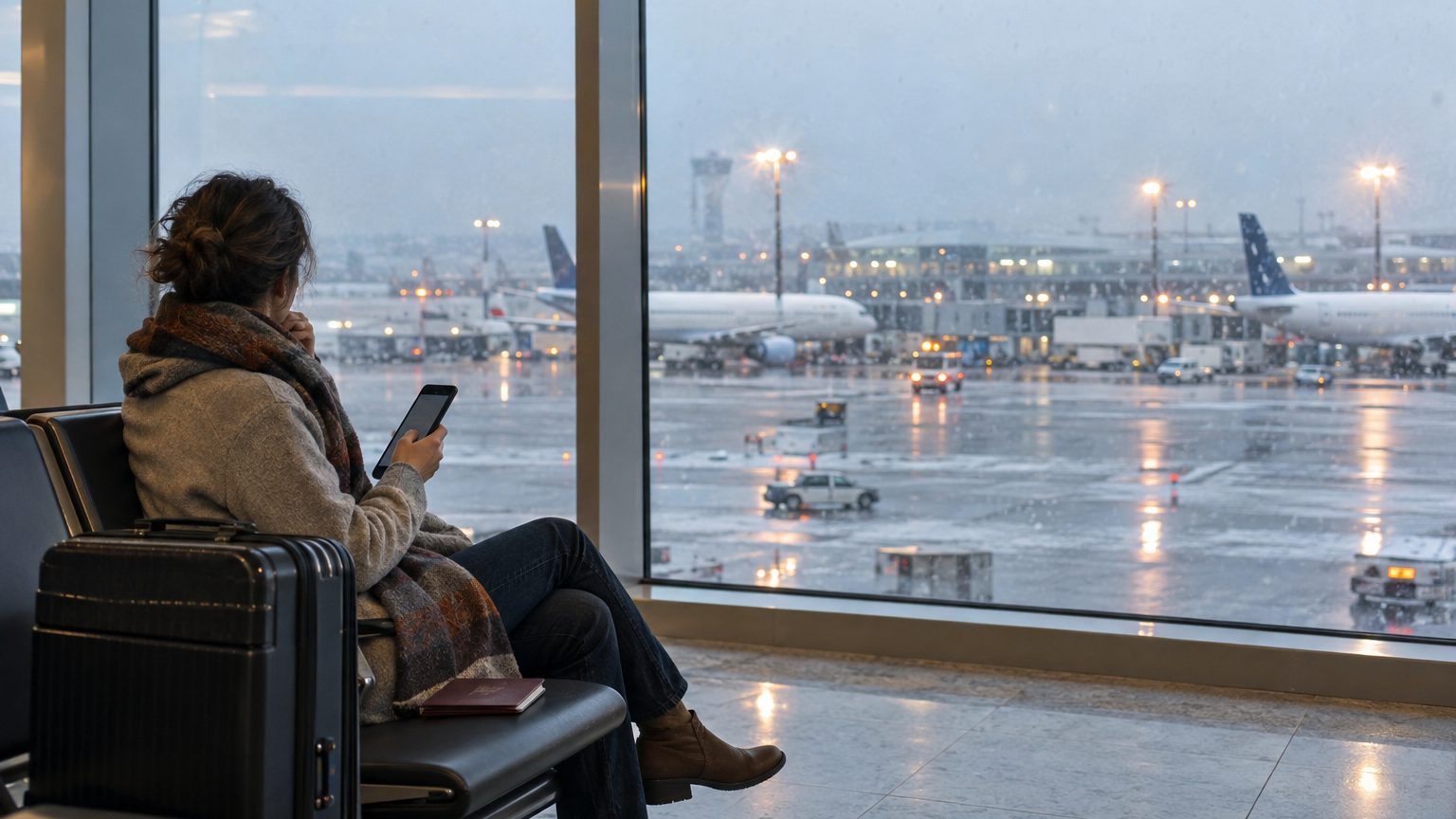
Often yes, with conditions. Standard policies usually pay for a weather cancellation or long delay if you bought before the storm was named or forecast and the disruption clears the policy’s delay threshold. Skipping a flight because the forecast looks bad is a different matter. Only the optional cancel for any reason (CFAR) upgrade covers that, and it returns just a share of your nonrefundable costs. Buy before winter weather appears in the forecast, then check whether your credit card or the airline already covers the same loss.
Does travel insurance cover weather delays
Trip delay vs. trip interruption vs. trip cancellation: which one pays
Three benefits, three triggers. Trip cancellation applies before you leave and
typically reimburses up to 100% of prepaid, non-refundable trip costs
when a covered reason stops the trip. Trip interruption applies after departure, when a covered event cuts the trip short. Trip delay is the small one.
It reimburses eligible costs you incur because of the delay, including meals, accommodations, communication and transportation.
It does not replace the airline’s refund obligation.
Foreseeable events and the named-storm exclusion
Insurers pay for the unexpected.
If severe weather has been forecasted, predicted, or named, coverage generally no longer applies unless you bought before the event was forecast.
The state insurance regulators’ association says the same about winter storms:
if you buy after a winter or tropical storm is named, your plan typically won’t cover claims related to it.
A snowstorm is not treated more kindly than a hurricane. Read how your policy defines “severe weather,” because the wording sets what counts.
Delay thresholds, daily limits and what receipts you need
Waiting periods run from about 3 to 12 hours.
One insurer’s plans require 10, 8 or 6 hours depending on tier.
Another’s mid-tier plan
pays up to $200 a day and $800 total after a 5-hour carrier delay.
That gap matters in a snowstorm:
when a winter storm delays a flight 12 hours, the airline typically doesn’t owe you meals or a hotel (a refund may still apply if you decline the delayed flight).
Keep meal and hotel receipts and the airline’s written delay notice. The airline-side steps are covered in winter flight delays.
| Coverage type | What triggers it | Typical reimbursement (varies by policy) | Weather coverage notes | Buy-by timing |
|---|---|---|---|---|
| Standard trip cancellation | Airline cancels in a snowstorm; a covered family member is sick | Up to 100% of insured nonrefundable costs | Severe weather must be unforeseen at purchase. A storm named before purchase is excluded. | Before the storm is named or forecast |
| Trip interruption | Covered event cuts the trip short after departure | Unused prepaid costs and added transport, up to the policy limit | Same foreseeable-event limits | Before the storm is named or forecast |
| Trip delay | 8-hour weather delay that meets the minimum wait | Meals, lodging and transport up to daily and trip caps | Weather is a common covered reason if not foreseeable at purchase | Before the storm is named or forecast |
| CFAR | You decide not to fly over a forecast | Commonly 50% to 75% of insured nonrefundable costs | Covers a voluntary choice, if you meet the rules | Within the first-deposit window; cancel before the cutoff |
| Credit card benefit | Long delay or cancellation on a trip paid with the card | Often capped per ticket or trip | Check the card’s guide to benefits for exclusions | Pay for the trip with that card |
| Airline/DOT refund | Airline cancels or significantly changes the flight and you decline alternatives | Ticket price to the original payment method | Applies whatever the cause, but not meals or hotels for weather | No purchase needed |
Cancel for any reason travel insurance
How much does cancel for any reason (CFAR) coverage reimburse
Never everything.
Reimbursement ranges from 50% to 75% of prepaid, non-refundable trip costs, with about 80% of plans offering 75%.
One marketplace reports that
no policy on its site guarantees 100% reimbursement for CFAR.
On $2,000 of nonrefundable costs, that is $1,000 to $1,500 back.
Eligibility rules: purchase window, insured trip cost and the cancellation cutoff
Three conditions, all strict.
Buy within 10 to 21 days of your first trip payment, insure all prepaid nonrefundable expenses, and cancel before the plan’s cutoff, often at least 48 hours before departure.
Miss one and the benefit is gone. Confirm the exact terms in the certificate, since windows vary by provider and state.
Is CFAR worth the higher premium for a holiday trip
CFAR
typically adds 40% to 50% to the policy’s cost.
The upgrade makes sense when thousands of nonrefundable dollars are at stake and you might cancel for a reason no list covers. For a single $300 fare, it rarely pays off.
When to buy travel insurance
Why the first-deposit window matters
You can buy after booking, but the best features expire.
Pre-existing condition waivers usually require purchase within 10 to 21 days of your first deposit,
and
typically full trip cost insured.
Use this timing checklist:
- Buy the day you pay the first deposit.
- Confirm the CFAR and waiver windows in writing.
- Insure every prepaid, nonrefundable cost.
- Note the CFAR cancellation cutoff before departure.
What happens if you buy after a storm has been named or forecast
That storm is excluded. Still,
the rest of the policy stays active for events unrelated to the named storm.
CFAR and interruption-for-any-reason (IFAR) upgrades are the main coverage that can apply to storm-related incidents when you buy after the storm is named,
and only if the window is still open.
Which cancellation reasons are covered by travel insurance?
Commonly covered reasons: illness, death in the family, severe weather, carrier shutdown
Policies list covered reasons: illness or injury, a death in the family, severe weather, and a carrier shutdown. Delay benefits add others.
One insurer’s list includes common carrier delay, natural disaster and adverse weather.
Weather counts when it is severe, unforeseen at purchase, and actually causes the cancellation or a delay past the threshold.
Common exclusions: change of mind, pre-existing conditions, known events
Travel insurance excludes known events, pre-existing conditions and cancellations for reasons not listed in the policy, unless you get a waiver or add-on.
Before buying, check five things: the definition of severe weather, delay hours required, per-day limits, exclusions, and whether coverage is primary or secondary.
How much does travel insurance cost for a domestic holiday flight?
Comprehensive plans typically cost 4% to 10% of prepaid, non-refundable trip costs.
The U.S. Travel Insurance Association puts it at
4% to 8%, about $40 to $80 per $1,000 of trip expenses.
As an illustration, four $350 fares ($1,400) would run roughly $56 to $112, or about $78 to $168 with CFAR added. Actual quotes depend on age, coverage and provider.
Do you need travel insurance if your credit card or the airline already covers you?
What credit card trip delay and cancellation benefits usually require
Often, yes, partly. Premium cards commonly pay
up to $500 per ticket after 6 or 12 hours, or an overnight stay.
Some limit you to
two claims per card per 12 months,
and some require the whole trip on the card. Compare the guide to benefits for primary versus secondary coverage. Secondary pays only after other coverage does.
What the airline owes you under U.S. Department of Transportation rules, and what it doesn’t
If the airline cancels or significantly changes a flight,
you are entitled to a refund if you don’t accept the alternative transportation or travel credits offered.
Card refunds are due
within 7 business days, other payment methods within 20 calendar days.
Accepting a credit can end the cash refund, so decline it if you want the money. Meals and hotels are another matter: the DOT notes
some airlines may not offer amenities when bad weather causes the delay.
Details are in flight cancelled due to weather.
A short decision framework:
- Refundable or small fare, card with delay benefits: skip the policy.
- Flights plus nonrefundable lodging, rentals or tours: buy standard coverage.
- Large nonrefundable cost you might cancel voluntarily: add CFAR.
How do you file a travel insurance claim for a canceled flight?
Documents to collect at the airport and before you leave
Claims succeed on paperwork. Gather these:
- The airline’s written cancellation or delay notice (carrier-issued letter)
- Itemized receipts for meals, lodging and transport
- Your itinerary and policy number
- Dated screenshots of the airline app and flight status
- Proof of the weather event, such as a National Weather Service warning
For the airline-side steps, see what to do if your flight is delayed.
Mistakes that get claims denied
Late filing is a common reason for denial.
Most insurers require notice within 20 to 90 days of the incident.
Other classic errors: skipping the airline refund first, which insurers expect you to
request from travel suppliers,
buying after the storm was named, and tossing receipts.
Frequently Asked Questions
Is travel insurance worth it for a domestic flight?
It depends on how much nonrefundable money you have riding on the trip. A refundable ticket backed by the DOT refund rule and a card with delay benefits may leave little to insure. Prepaid hotels, rentals or tours change the math.
Can you buy travel insurance after a flight is canceled?
You can buy it, but it will not cover that cancellation, which is already a known event.
The rest of the policy still covers unrelated events.
Does travel insurance cover prepaid hotels and rental cars if a flight is canceled?
Often, if you included those costs in the insured trip cost and the cancellation is a covered reason. Trip delay benefits can also
reimburse lost prepaid expenses.
Limits apply, so check the policy.
How long does a travel insurance claim take to be paid?
One insurer reports an
average of 13 days for approved claims,
while another source cites
typically 4 to 6 weeks.
Complete documentation speeds things up. If a claim stalls or is denied unfairly, your state insurance department takes complaints.
Sources: lb7.uscourts.gov | transportation.gov | transportation.gov